Crafting a Featured Posts & Categories Strategy That Amplifies Expert Voices
How modern professional journals can improve discoverability, elevate author expertise, and drive repeat readership through strategic content curation.
Why Featured Posts Matter in a Crowded Digital Landscape
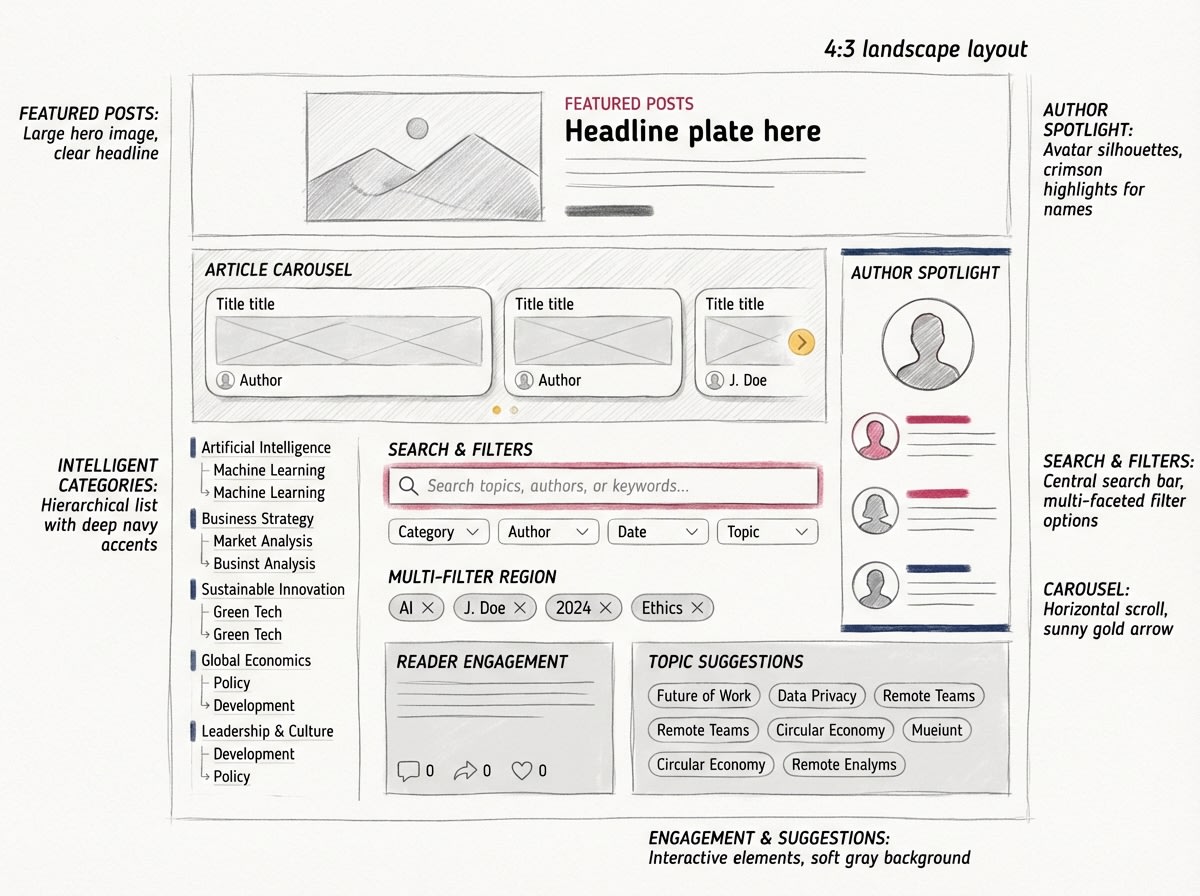
In today's information-saturated environment, readers are overwhelmed with content choices. A well-executed featured posts strategy acts as an editorial compass, guiding your audience to the most valuable, timely, and impactful content your journal has to offer.
Featured posts serve multiple strategic purposes:
- Showcase Expert Authority: Highlighting contributions from recognized thought leaders establishes your journal as a credible source of industry insights.
- Drive Engagement: Featured content receives 3-5x more views than standard posts, creating momentum that benefits your entire content ecosystem.
- Signal Editorial Quality: Curated selections demonstrate that your publication maintains high standards and actively guides readers to excellence.
- Create Entry Points: New visitors need clear starting points; featured posts provide that crucial first impression.
Building an Intelligent Categories Architecture
While featured posts capture attention, a robust categories system ensures sustained discoverability. Think of categories as the organizational backbone of your journal—they should reflect how your audience naturally thinks about and searches for content.
Principles for Effective Category Design
1. User-Centric Taxonomy: Categories should match your readers' mental models, not your internal organizational structure. Conduct user research to understand how your audience conceptualizes topics.
2. Balanced Depth: Aim for 5-8 primary categories with 2-4 subcategories each. Too few creates confusion; too many overwhelms.
3. Mutually Exclusive Categories: Each post should have one clear primary category. Overlapping categories dilute your organizational clarity.
4. SEO-Friendly Naming: Use clear, searchable terms that align with how people actually search for your content online.
Integrating Search and Filters for Maximum Discoverability
Modern readers expect sophisticated search capabilities. Your journal should offer:
- Multi-faceted filtering: Allow users to filter by category, author, date, topic tags, and content type simultaneously
- Intelligent search: Implement semantic search that understands context and synonyms, not just exact keyword matches
- Related content suggestions: Use algorithms to surface relevant articles based on reading patterns
- Saved searches and alerts: Enable readers to subscribe to specific topics or authors
Amplifying Expert Author Voices
Your authors are your greatest asset. A strategic approach to featuring their work transforms individual contributors into recognizable thought leaders while building your journal's reputation by association.
Author-Centric Features to Implement
Dedicated Author Pages
Create comprehensive profiles showcasing each author's expertise, publication history, and social proof. Include professional headshots, bios, credentials, and links to their complete body of work on your platform. Visit our Meet Our Authors section for inspiration.
Author Spotlights in Featured Rotations
Regularly feature different authors in your homepage hero section. This not only diversifies your content presentation but also gives each contributor their moment in the spotlight, encouraging continued high-quality submissions.
Author-Based Navigation
Enable readers to follow specific authors and receive notifications when they publish new content. This creates direct relationships between writers and readers, fostering community and loyalty.
Driving Repeat Readership Through Strategic Curation
The ultimate goal of any content strategy is to transform casual visitors into loyal, returning readers. This requires a multi-layered approach that combines algorithmic intelligence with human editorial judgment.
Proven Tactics for Building Reader Loyalty
- Consistent Publishing Cadence
Establish predictable publishing schedules. Readers should know when to expect new content from their favorite authors or in their preferred categories.
- Personalized Content Recommendations
Use reading history and engagement data to surface relevant content. Show readers "Because you read X, you might enjoy Y" suggestions.
- Email Digest Strategies
Offer customizable email digests that allow readers to receive updates on specific categories or authors. Make it easy to stay connected without overwhelming inboxes.
- Series and Thematic Collections
Group related articles into series or collections. This encourages binge-reading and helps readers dive deep into topics they care about.
- Interactive Elements
Enable comments, discussions, and reader contributions. Community engagement transforms passive consumption into active participation.
Ready to Transform Your Journal's Content Strategy?
Implementing these strategies requires thoughtful planning and the right platform infrastructure. Whether you're building from scratch or optimizing an existing publication, the key is to put reader experience and author recognition at the center of every decision.
Get In TouchMeasuring Success: Key Metrics to Track
A strategy is only as good as your ability to measure its impact. Focus on these critical metrics:
Return Visitor Rate
Track how many readers come back within 30 days
Pages Per Session
Measure content discovery effectiveness
Search Usage Rate
Indicates how actively readers explore your archive
Conclusion: Building a Reader-First, Author-Centric Journal
The most successful modern professional journals understand that content strategy is not about gaming algorithms or chasing viral moments. It's about creating a sustainable ecosystem where expert voices are amplified, readers can easily discover valuable insights, and community thrives.
By implementing a thoughtful featured posts strategy, building an intuitive categories architecture, and investing in robust search and filtering capabilities, you create a publication that serves both your authors and your audience with excellence.
The journals that will thrive in the coming years are those that recognize content curation as both an art and a science—requiring editorial judgment, technical sophistication, and an unwavering commitment to reader value.
📚 Explore More Insights
Discover additional strategies and expert perspectives in our complete blog archive, or learn more about our editorial mission.