Garden Hearth: Cultivating Joy from Windowsill Herbs to Backyard Sanctuaries
A seasonal, sustainable planting roadmap with cozy cottagecore projects and beginner-friendly tips
There's something deeply magical about nurturing life from seed to harvest, whether you're tending a single basil plant on a sunny windowsill or transforming your backyard into a flourishing sanctuary. Gardening is more than a hobby—it's a practice of patience, connection, and joy. This guide will walk you through creating your own garden hearth, no matter your space or experience level.
🌱 Starting Small: The Magic of Windowsill Herbs
Before you dream of sprawling garden beds, let's celebrate the humble windowsill—a perfect starting point for any aspiring gardener. Windowsill herb gardens offer instant gratification, minimal investment, and maximum flavor for your kitchen creations.
Best Beginner Herbs for Indoor Growing
- Basil: The quintessential kitchen herb that thrives in warm, sunny spots. Pinch regularly to encourage bushy growth.
- Mint: Nearly indestructible and perfect for teas. Keep it contained—it's an enthusiastic spreader!
- Parsley: A slow starter but reliable producer. Curly or flat-leaf, both varieties are forgiving.
- Chives: Delicate onion flavor with gorgeous purple blooms. Tolerates lower light conditions.
- Thyme: Drought-tolerant and compact, perfect for small pots and Mediterranean dishes.
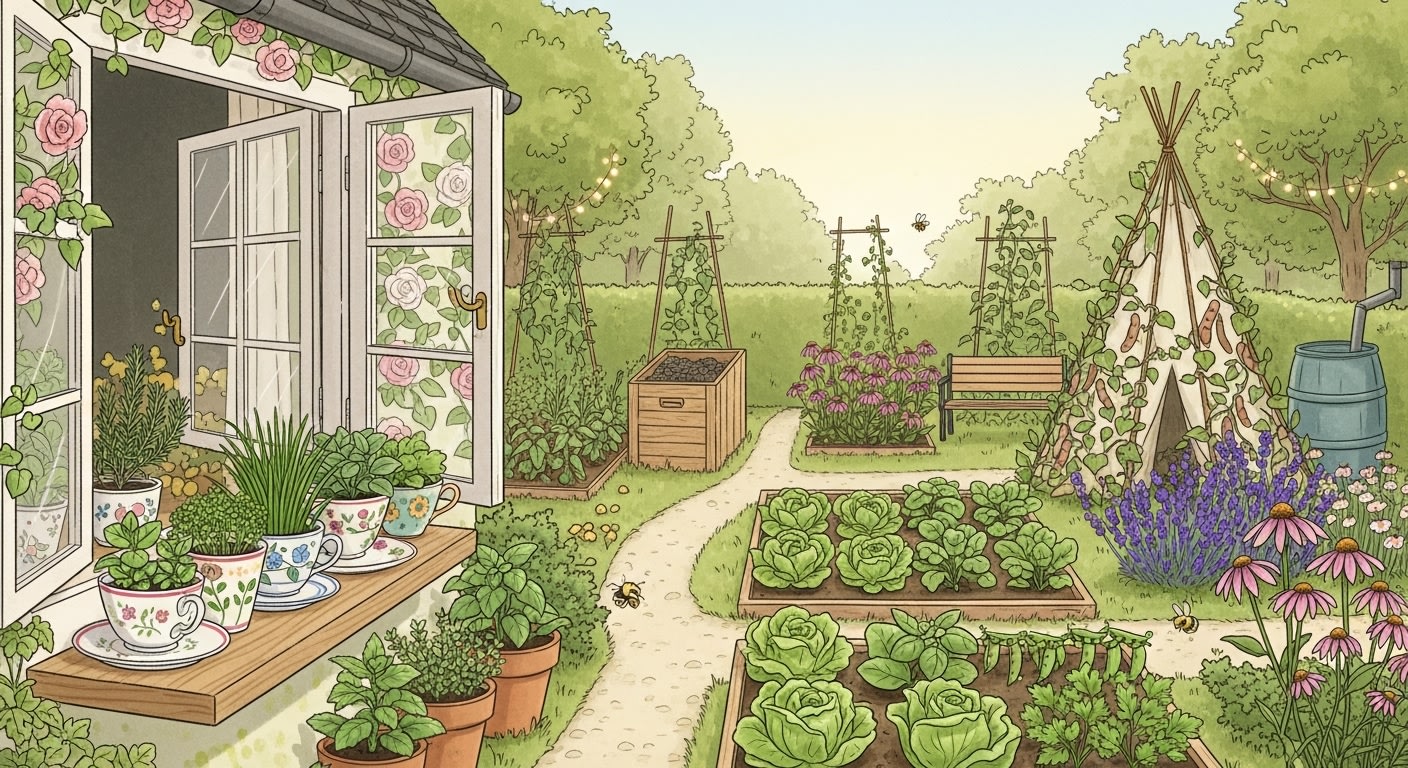
💡 Cottagecore Tip: Repurpose vintage teacups, mason jars, or ceramic pitchers as herb planters. Drill drainage holes in the bottom and arrange them on a rustic wooden tray for that charming, lived-in aesthetic.
Essential Care for Indoor Herbs
Success with windowsill herbs comes down to three key factors:
- Light: Most herbs need 6-8 hours of bright light. South-facing windows are ideal; supplement with grow lights if needed.
- Water: Keep soil consistently moist but never waterlogged. Touch the soil—if the top inch is dry, it's time to water.
- Drainage: Always use pots with drainage holes and quality potting mix. Soggy roots are the #1 killer of indoor herbs.
🌿 Your Seasonal Planting Roadmap
Gardening in harmony with the seasons creates a sustainable rhythm that works with nature rather than against it. Here's your year-round guide to planting success.
Spring (March - May): The Season of Awakening
What to Plant: Cool-season vegetables like lettuce, spinach, peas, radishes, and carrots. Start tomatoes and peppers indoors 6-8 weeks before your last frost date.
Cottagecore Project: Create a "cutting garden" corner with sweet peas, snapdragons, and calendula for fresh bouquets throughout the season. Plant them in rows or clusters near a rustic fence or trellis.
Summer (June - August): The Season of Abundance
What to Plant: Heat-lovers like tomatoes, peppers, cucumbers, squash, and beans. Succession plant lettuce and herbs every 2-3 weeks for continuous harvest.
Cottagecore Project: Build a simple bean teepee using bamboo poles tied at the top. Plant pole beans or morning glories around the base to create a living playhouse or meditation nook.
Fall (September - November): The Season of Harvest
What to Plant: Return to cool-season crops—kale, broccoli, cauliflower, and root vegetables. Plant garlic cloves for next summer's harvest.
Cottagecore Project: Dry herbs and flowers from your summer garden. Bundle them with twine and hang them from exposed beams or create a decorative herb wreath for your kitchen.
Winter (December - February): The Season of Planning
What to Plant: Focus on indoor growing—microgreens, sprouts, and forcing bulbs like paperwhites or amaryllis for winter blooms.
Cottagecore Project: Start a garden journal. Sketch your dream garden layout, press flowers from last season, and plan your seed orders by candlelight with a cup of herbal tea.
🏡 Creating Your Backyard Sanctuary
A backyard sanctuary isn't about perfection—it's about creating a space that nourishes your soul as much as it nourishes your plants. Here's how to transform any outdoor space into your personal garden hearth.
Sustainable Garden Design Principles
- ✓ Start with healthy soil: Compost, compost, compost! It's the foundation of sustainable gardening.
- ✓ Choose native plants: They require less water, attract beneficial pollinators, and thrive with minimal intervention.
- ✓ Practice companion planting: Pair plants that support each other (tomatoes + basil, carrots + onions).
- ✓ Mulch generously: Conserves water, suppresses weeds, and feeds soil as it breaks down.
- ✓ Collect rainwater: Install a rain barrel to reduce water usage and provide chlorine-free irrigation.
- ✓ Welcome wildlife: Bird baths, bee hotels, and diverse plantings create a thriving ecosystem.
Cozy Cottagecore Garden Elements
Transform your garden into a storybook retreat with these charming additions:
- Winding pathways: Use gravel, stepping stones, or wood chips to create meandering paths that invite exploration.
- Vintage finds: Repurpose old watering cans, wheelbarrows, or wooden crates as planters and garden decor.
- Seating nooks: Place a weathered bench under a flowering tree or create a circle of stones around a small fire pit.
- Climbing structures: Arbors, trellises, and pergolas covered in roses, clematis, or grapevines add vertical interest and romance.
- Herb spirals: Build a raised spiral garden bed for herbs—it's functional, beautiful, and creates multiple microclimates.
- Fairy lights: String solar-powered lights through trees or along fences for magical evening ambiance.
🌸 Beginner-Friendly Projects to Get Started
Ready to dig in? Here are three achievable projects perfect for garden beginners that deliver maximum joy with minimal fuss.
Project 1: The Three-Herb Kitchen Garden
Time: 30 minutes | Cost: $15-25 | Difficulty: Easy
Choose three herbs you actually use in cooking (basil, rosemary, and parsley are classics). Plant them in a long rectangular planter or three matching pots. Place near your kitchen door for easy access. Water when the top inch of soil is dry, and harvest regularly to encourage growth.
Project 2: The Pollinator Patch
Time: 2 hours | Cost: $30-50 | Difficulty: Easy-Moderate
Dedicate a 3x3 foot area to pollinator-friendly flowers. Choose a mix of native wildflowers, lavender, echinacea, and black-eyed Susans. Prepare the soil with compost, plant according to package directions, and water deeply. Once established, these plants are low-maintenance and will attract butterflies, bees, and hummingbirds all season long.
Project 3: The Salad Bowl Container Garden
Time: 45 minutes | Cost: $20-35 | Difficulty: Easy
Use a large container (at least 12 inches deep) to create a "cut and come again" salad garden. Plant a mix of lettuce varieties, arugula, and spinach. Sow seeds densely and harvest outer leaves when they reach 4-6 inches. This provides fresh salad greens for weeks and can be grown on a balcony, patio, or small yard.
🌼 Remember: Gardens Are Journeys, Not Destinations
Every gardener kills plants. Every garden has weeds. Every season brings surprises—some delightful, some challenging. The joy of gardening isn't in achieving perfection; it's in the daily ritual of tending, observing, and connecting with the living world. Start small, be patient with yourself, and let your garden grow alongside you.
🌾 Your Garden Hearth Awaits
Whether you're nurturing a single pot of basil or cultivating an entire backyard ecosystem, you're participating in one of humanity's oldest and most rewarding practices. Your garden hearth—that sacred space where growth, beauty, and nourishment converge—is waiting for you to bring it to life.
Start where you are. Use what you have. Plant what brings you joy. The rest will follow naturally, one seed, one season, one small victory at a time.
Happy planting, and may your garden hearth overflow with abundance! 🌱✨